

At the recent Werribee state by-election, Labor retained the seat but suffered a 16.5% drop in its primary vote and a 10.1% swing on a two-party-preferred basis. Observers attribute this shift to rising voter discontent over housing affordability, immigration levels, foreign investment in property, and everyday cost-of-living pressures.
The Albanese Government has maintained record-high immigration targets, with more than 700,000 migrants expected to enter Australia across the 2023–2025 period. Critics argue this has intensified demand on housing, pushed up rent and property prices, and placed pressure on public services, particularly in growth corridors like Wyndham.
Labor’s continued support for international property investment, paired with limited progress in alleviating grocery, fuel and utility costs, has further eroded voter confidence. While Labor maintains a policy platform promoting equity and access, many locals feel they’ve been left behind.
Seven candidates are contesting the seat of Lalor in this federal election. Below is a breakdown of each candidate and their policies, presented in alphabetical order, with relevant critiques based on their platforms or party records.

Patrizia Barcatta (Libertarian Party)
Trish Barcatta is a passionate local, a dedicated mother, and one of the most active voices in the freedom community. She has spent years energising and organising her community to push back against government overreach and broken promises. In a previous council campaign, she earned over 10% of the vote on a 10-person ballot, signalling strong grassroots support and a local appetite for change.
Trish is standing up to ask the questions many Australians are asking: Why is the cost of living skyrocketing? Why hasn’t government delivered on its promises? And how can we take back control of our lives and our future?
Running with the Libertarian Party, her campaign focuses on:
Income tax cuts and income splitting for couples
Dramatic reductions in government spending
Ending subsidies for renewable energy projects
Potential drawback: Critics say the Libertarian model offers little in the way of safety nets for vulnerable communities, including healthcare and housing assistance.

Mira D’Silva (Liberal Party)
Mira D’Silva is the Liberal candidate for Lalor. An entrepreneur and long-time community advocate, Mira settled in Melbourne’s west in 2004, where she co-founded a successful technology firm and has been actively involved in the region for over 20 years.
She currently serves on the committee of the Australian Computer Society and the Victorian Multicultural Committee, mentoring women and migrants pursuing leadership roles. Drawing on her business background, she is campaigning to get Australia “back on track” by easing cost-of-living pressures, improving local infrastructure, and enhancing public safety.
The Liberal Party’s national platform includes:
Tax-deductible mortgage repayments for new home buyers
A long-term transition to nuclear energy
An audit of Indigenous program spending
Potential drawback: The Liberal Party continues to support high migration targets and foreign investment, which some argue contributes to local housing shortages and affordability concerns.

Matthew Emerson (Family First Party)
Matthew Emerson is a dedicated advocate for Family First values, with a strong background in business operations and community service. He has worked across SMEs and Government Business Enterprises in telecommunications, media, and IT, and holds a Certificate IV in Contact Centre Operations from Swinburne University.
A father of five, Matthew brings firsthand experience of the pressures facing families and small business owners. He’s known for his passionate involvement in church, charitable outreach, and homelessness initiatives, and is motivated by a vision of Australia where families are respected as the cornerstone of society.
His campaign with Family First focuses on:
Empowering parents to direct their children’s education and welfare
Opposing progressive agendas in schools and government policy
Promoting traditional family values and defending children’s innocence
Potential drawback: The party’s emphasis on social conservatism may limit its engagement with broader economic or infrastructure concerns that are also front of mind for many Lalor voters.

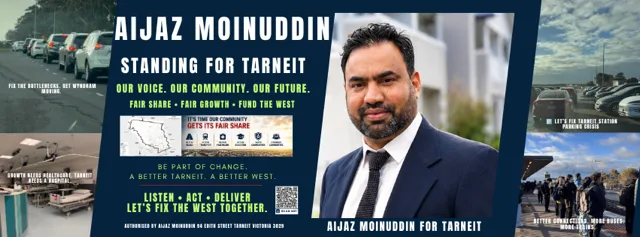
Aijaz Moinuddin (Independent)
Running as an independent, Moinuddin has not yet published a formal policy platform.
Potential drawback: The absence of clear policy positions may make it difficult for voters to assess his capacity to represent local needs.

Jason Oosthuizen (Pauline Hanson’s One Nation)
Jason Oosthuizen isn’t a career politician. He’s a CFA volunteer firefighter, founding president of the Stawell Pioneers Soccer Club, and someone who understands the everyday struggles of working Australians. He’s running to restore integrity in government, bring back affordability, and challenge radical ideologies influencing public policy.
Jason’s platform with One Nation focuses on:
Halving the fuel excise to reduce cost-of-living pressures
Cracking down on abuse of the immigration system
Strengthening local manufacturing and supporting Australian farmers
Opposing digital overreach and gender ideology in schools
Rejecting foreign ownership of Australian farmland
Potential drawback: While popular among voters seeking bold reforms, critics warn that some of One Nation’s proposed spending cuts and policy stances may reduce funding to public services if not carefully managed.

Owen Parris (The Greens)
Owen Parris is a university student and campaigner in Melbourne’s west. He believes Labor has taken the west for granted and that voters deserve better. Owen is focused on addressing housing stress and cost-of-living pressures while holding major parties to account.
Owen’s campaign promotes The Greens’ policies of:
Making big corporations pay their fair share of tax
Rejecting corporate donations in favour of grassroots funding
Reinvesting in public services that communities rely on
Providing free university and TAFE, and cancelling student debt
Expanding Medicare to cover dental and mental health care
Allocating 1% of the federal budget to biodiversity and climate programs
Potential drawback: Some economic analysts question the financial viability of the Greens’ large-scale reforms without considerable new taxation or national borrowing.

Joanne Ryan (Australian Labor Party)
Joanne Ryan has represented Lalor in Parliament since 2013 and currently serves as Chief Government Whip. A lifelong advocate for fairness and Labor values, she has devoted her career to improving outcomes for young people in Melbourne’s west.
Joanne believes in the transformative power of education and has seen firsthand how it can change lives. In Parliament, she focuses on ensuring that growth areas like Wyndham receive the support, infrastructure funding, and inclusive opportunities they need to thrive.
Labor’s national platform includes:
The “Help to Buy” shared equity housing scheme
Targeted investment in Medicare and health access
Continued support for international migration and foreign investment
Potential drawback: Labor’s immigration and foreign investment policies are under fire locally for fuelling housing shortages and worsening cost-of-living pressures, particularly in fast-growing areas like Wyndham.
Voting Information
Election Day is Saturday, 3 May 2025. Polling places across the Lalor electorate will open at 8:00am and close at 6:00pm sharp.
Early voting opens Tuesday, 22 April and runs through Friday, 2 May (closed Anzac Day). Voters can find their nearest early voting centre by visiting the AEC’s official site at www.aec.gov.au/where.
Residents are encouraged to check their enrolment status and plan their vote in advance. Every vote in Lalor contributes to shaping not only local representation—but the direction of the next federal government.


